HIGH QUALITY GENUINE OEM, AFTERMARKET SPARES


The car has been running reliably for years. Then one morning, a warning light stays on slightly longer than usual. A few days later, the engine feels strained in slow-moving traffic. You schedule a service expecting a routine fix. Instead, the service advisor explains that a major component has failed, and the estimate runs into several lakhs.
For many car owners, the real cost of ownership does not come from fuel or insurance. It comes from replacing critical spare parts that fail quietly and expensively. In conditions marked by dense traffic, uneven roads, high temperatures, and seasonal flooding, these failures tend to occur sooner than expected.
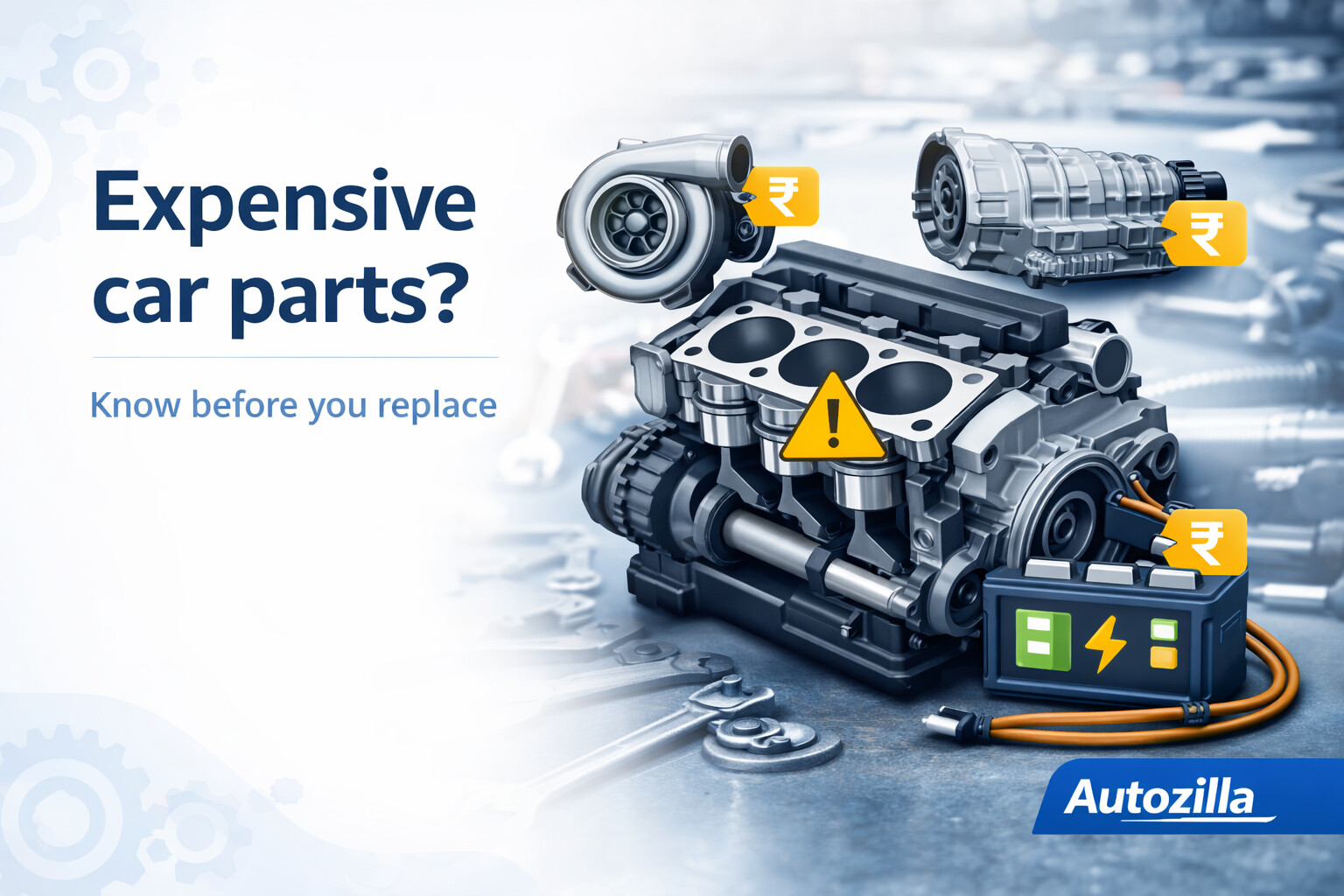
This guide explains the ten most expensive car parts, why they cost so much, and how owners can reduce replacement expenses without compromising safety or reliability.
High-cost components usually share a few common traits:
Modern vehicles from brands such as Volkswagen, Skoda, BMW, Mercedes-Benz, Hyundai, Tata, and Mahindra rely heavily on electronics and precision components. While this improves performance and efficiency, it also raises replacement costs when parts fail.
| Rank | Car part | Typical replacement cost range | Commonly affected vehicles |
|---|---|---|---|
| 1 | Engine | ₹2.5 lakh to ₹7 lakh+ | VW, Skoda, Toyota, Hyundai, BMW |
| 2 | Automatic transmission or CVT | ₹2 lakh to ₹6 lakh | Hyundai, Honda, VW, Mercedes-Benz |
| 3 | EV or hybrid battery pack | ₹4 lakh to ₹15 lakh+ | Tata, Toyota, MG, Hyundai |
| 4 | Turbocharger | ₹1 lakh to ₹3.5 lakh | VW, Skoda, Hyundai, Kia |
| 5 | Suspension system | ₹1.5 lakh to ₹5 lakh | BMW, Mercedes-Benz, Audi |
| 6 | ECU and control modules | ₹60,000 to ₹2 lakh+ | Most modern vehicles |
| 7 | Infotainment system | ₹80,000 to ₹3 lakh | Hyundai, Kia, MG, BMW |
| 8 | Fuel injection system | ₹80,000 to ₹2.5 lakh | VW, Skoda, Hyundai, Maruti |
| 9 | Differential and AWD components | ₹1.5 lakh to ₹4 lakh | Mahindra, Toyota, Jeep |
| 10 | Exhaust aftertreatment system | ₹1 lakh to ₹4 lakh+ | Diesel vehicles across brands |
Estimated cost: ₹2.5 lakh to ₹7 lakh+
Engines fail primarily due to overheating, oil neglect, or prolonged driving with warning signs. Turbo petrol engines used by Volkswagen, Skoda, Hyundai, and Kia are particularly sensitive to oil quality.
Estimated cost: ₹2 lakh to ₹6 lakh
Estimated cost: ₹4 lakh to ₹15 lakh+
Estimated cost: ₹1 lakh to ₹3.5 lakh
Estimated cost: ₹1.5 lakh to ₹5 lakh
Estimated cost: ₹60,000 to ₹2 lakh+
Estimated cost: ₹80,000 to ₹3 lakh
Estimated cost: ₹80,000 to ₹2.5 lakh
Estimated cost: ₹1.5 lakh to ₹4 lakh
Estimated cost: ₹1 lakh to ₹4 lakh+
High replacement costs rarely occur without warning. They are usually the result of ignored symptoms, delayed maintenance, or lack of awareness about how modern components wear under demanding conditions.
Understanding which parts are most expensive and how they fail allows owners to plan repairs better and avoid sudden financial stress. With informed decisions and timely maintenance, even high-value components become manageable over the long term.
Visit Autozilla and find the right parts for your car in just a few clicks.