HIGH QUALITY GENUINE OEM, AFTERMARKET SPARES


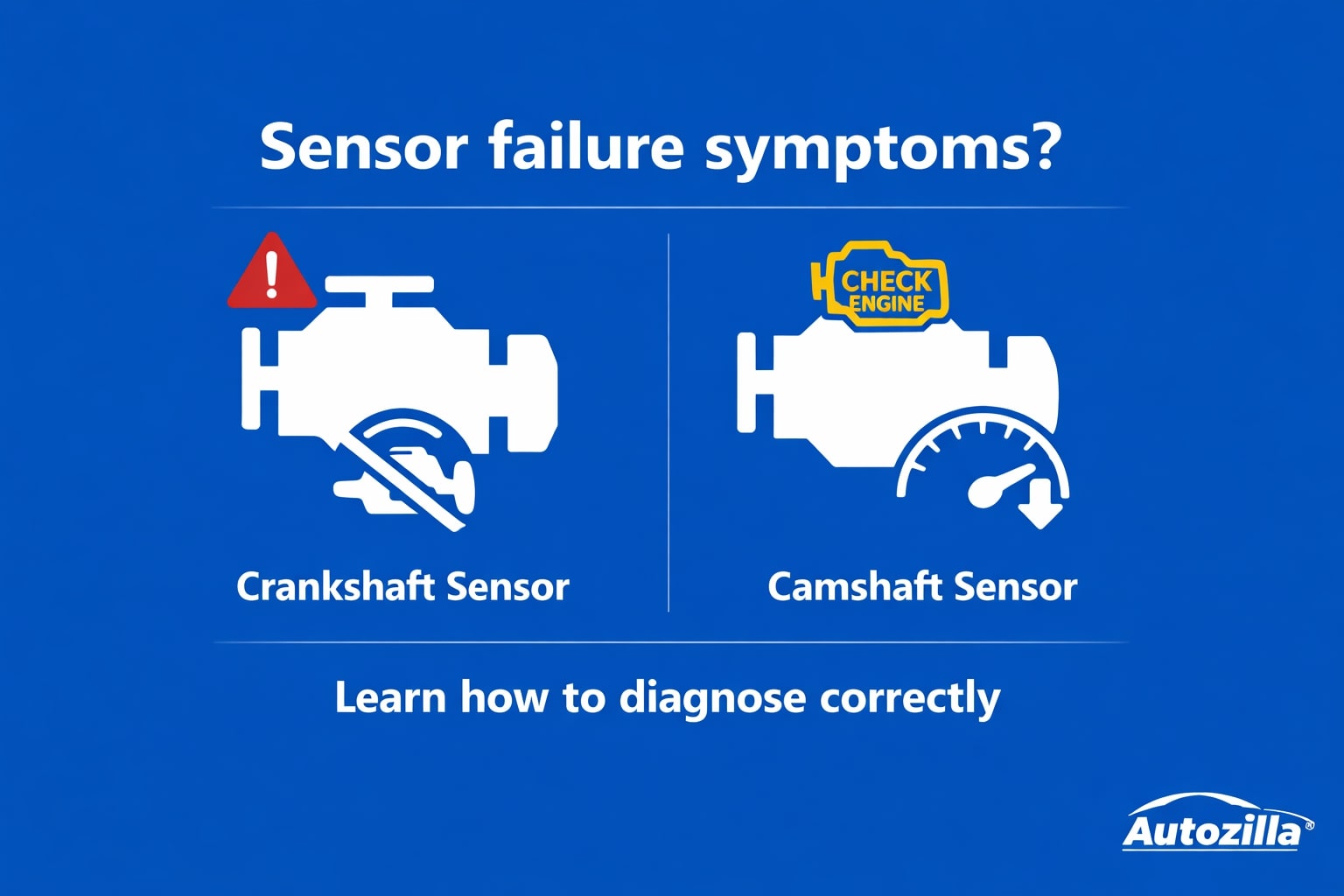
Modern vehicles are equipped with sophisticated sensors that help the engine control unit (ECU) manage ignition timing, fuel delivery, and engine performance. Two of the most critical sensors are the crankshaft position sensor (CKP) and the camshaft position sensor (CMP). When either of these sensors fails, it can lead to hard starts, misfires, or complete engine shutdowns. For garages and technicians, accurately identifying the faulty sensor ensures a faster repair, avoids unnecessary part replacements, and builds customer trust. This guide will help you understand the key differences between crankshaft and camshaft sensor failures, along with diagnosis methods for each.
Both sensors are essential for optimal engine performance, but they serve distinct roles in managing timing and combustion.
The crankshaft sensor tracks the position and rotational speed of the crankshaft. It helps the ECU determine:
If the crankshaft sensor fails, the ECU cannot read engine speed or piston position, causing a total system shutdown.
Check the sensor signal using a multimeter or oscilloscope and inspect the wiring for damage or contamination.
The camshaft sensor works in coordination with the crankshaft sensor. It allows the ECU to:
A failing camshaft sensor can cause incorrect fuel injection timing and inefficient combustion.
Use diagnostic tools to verify the signal and check the sensor alignment with timing components.
Crankshaft sensor failure usually leads to more critical engine issues that prevent starting or cause stalling.
Without accurate crankshaft data, the ECU disables ignition and fuel to protect the engine.
Confirm using OBD codes (P0335–P0339) and signal analysis before replacement.
Camshaft sensor issues are less severe and often result in reduced performance rather than total failure.
The ECU switches to default timing using crankshaft data only, reducing precision.
Verify OBD codes (P0340–P0349) and inspect sensor wiring and mounting position.
| Aspect | Crankshaft sensor failure | Camshaft sensor failure |
|---|---|---|
| Engine start | Usually no start | Often starts with difficulty |
| Engine stalling | Very common | Less common |
| Severity | Critical | Moderate |
| ECU response | Cuts ignition or fuel | Uses backup strategy |
| Driveability | Engine may shut down | Reduced performance |
Use an OBD-II scanner. Crankshaft sensor issues usually show P0335–P0339 codes. Camshaft sensor problems typically return P0340–P0349.
If RPM reads zero during cranking, the crankshaft sensor is likely at fault. If RPM is present but symptoms persist, suspect the camshaft sensor.
Check for oil contamination, broken insulation, corroded pins, or misaligned sensors.
Use a multimeter or oscilloscope. A healthy crankshaft sensor will produce a consistent waveform; a camshaft sensor should show a signal in sync with crankshaft rotation.
Check timing belts or chains. A worn or misaligned timing system can cause fault codes even if the sensors are fine.
Camshaft and crankshaft sensors may perform similar roles but their failures have different consequences. For garage technicians, knowing these differences improves repair accuracy, speeds up diagnosis, and enhances customer satisfaction. Want to reduce rework and improve your first-time fix rates? Explore high-quality OEM sensors and diagnostic tools at Autozilla – your trusted source for genuine spare parts online.
Visit Autozilla and find the right parts for your car in just a few clicks.