HIGH QUALITY GENUINE OEM, AFTERMARKET SPARES


India’s electric vehicle transition is no longer theoretical. With petrol prices consistently above ₹100 per litre, strong policy incentives, and increasing model availability, EV adoption has crossed 1.5 million units nationwide.
Manufacturers and dealerships frequently position EVs as low maintenance, mechanically simple, economical over the long term, and practically service free. While EVs do eliminate engine oil changes, clutch replacements, and many conventional mechanical wear components, they introduce a different maintenance architecture. This architecture is electronics heavy, battery dependent, and infrastructure sensitive.
Based on owner experience across major Indian cities such as Mumbai, Delhi, Bangalore, and Pune, many EV buyers encounter unexpected ownership costs within the first two years. These costs may not be frequent, but when they occur, they are expensive and highly specialized.
This article outlines the realistic maintenance landscape of EV ownership in India. The objective is not to discourage adoption, but to support financially informed decision making.
The high voltage battery pack represents about 35 to 40 percent of the vehicle’s total cost. It directly influences driving range, charging performance, thermal stability, and resale value.
Lithium ion batteries degrade over time due to charge cycles, thermal stress, high ambient temperatures, frequent DC fast charging, and sustained high load conditions. Most Indian EV manufacturers provide 8 year or 1.6 lakh km warranty coverage, typically guaranteeing 70 to 80 percent capacity retention.
Ownership questions that often remain unclear at the time of purchase include replacement cost after warranty, how degradation is measured, and what usage conditions affect warranty eligibility.
In India, sustained exposure to 45°C summer temperatures increases thermal load on battery packs, so cooling system health is critical. For any battery related component replacement, only verified OEM parts should be considered. If you need to source parts outside the service centre ecosystem, use a trusted auto spare parts website that supports genuine spare parts online and clear part compatibility.
EVs typically weigh 250 to 400 kg more than comparable petrol or diesel vehicles due to battery mass. Combined with instant torque delivery, this often leads to faster tyre wear.
Many EVs require reinforced sidewalls, low rolling resistance compounds, and stronger load ratings. Standard tyres can wear faster and feel less stable under repeated acceleration.
Follow the manufacturer specification for load rating and tyre type, and rotate tyres at recommended intervals. In cities where EV specific tyre inventory is limited, comparing options through a platform that supports automobile spare parts online shopping can help you find compatible choices without delays.
Over five years, tyre expenditure can be meaningfully higher for EV owners, especially with frequent city driving and rapid acceleration habits.
Regenerative braking reduces mechanical brake pad usage substantially. Many EV owners report brake pad life up to 80,000 to 100,000 km. However, EV braking systems are deeply integrated with electronic control systems.
ABS modules, stability control, regenerative coordination software, and electronic brake actuators increase system complexity. When issues arise, specialized diagnostic tools are required, and independent workshops may not be equipped.
Do not ignore warnings related to braking feel, ABS lights, or traction control alerts. If components need replacement, verified OEM car spares or certified aftermarket car parts in India are safer choices. Buying car parts online India from a trusted source also helps reduce counterfeit risk.
Modern EVs use liquid based thermal management systems to keep battery cell temperatures within a safe operating range. These systems often include non conductive coolant, cooling pumps, heat exchangers, thermal sensors, and dedicated piping.
Coolant quality, pump performance, and sensor accuracy directly affect battery temperatures. If the thermal system underperforms, the vehicle can enter reduced performance modes and battery degradation may accelerate.
Stick to the recommended coolant replacement schedule and address small leaks early. When replacing cooling parts, ensure compatibility and quality by sourcing from reliable channels for car spare parts online.
EVs operate as integrated electronic platforms. Critical systems include the Battery Management System, power control modules, charging interface control units, and vehicle control software.
While over the air updates are widely marketed, many India market EVs still require physical service visits for certain recalibrations and updates. EV diagnostic equipment can cost several lakhs, limiting independent workshop capabilities.
Budget for periodic scans and software updates, especially after charging related warnings or performance changes. For module replacement, prioritize OEM car spares or certified aftermarket parts from a trusted platform for genuine spare parts online.
Home charging is usually the most cost efficient long term solution, but the initial setup often requires additional spending beyond the vehicle price.
Depending on your building wiring, load capacity, and parking layout, you may need panel upgrades and dedicated circuits.
Get an electrician assessment before purchase if possible. Also note that frequent fast charging can increase per kilometre energy cost and contribute to long term battery stress, so balanced charging behavior supports battery health.
EV insurance premiums are often 15 to 25 percent higher than comparable ICE vehicles due to high battery replacement cost, specialized repair networks, and limited actuarial data. Over five years, this difference can add up to ₹30,000 to ₹40,000 depending on model and location.
Review battery coverage terms carefully, including exclusions and claim documentation requirements.
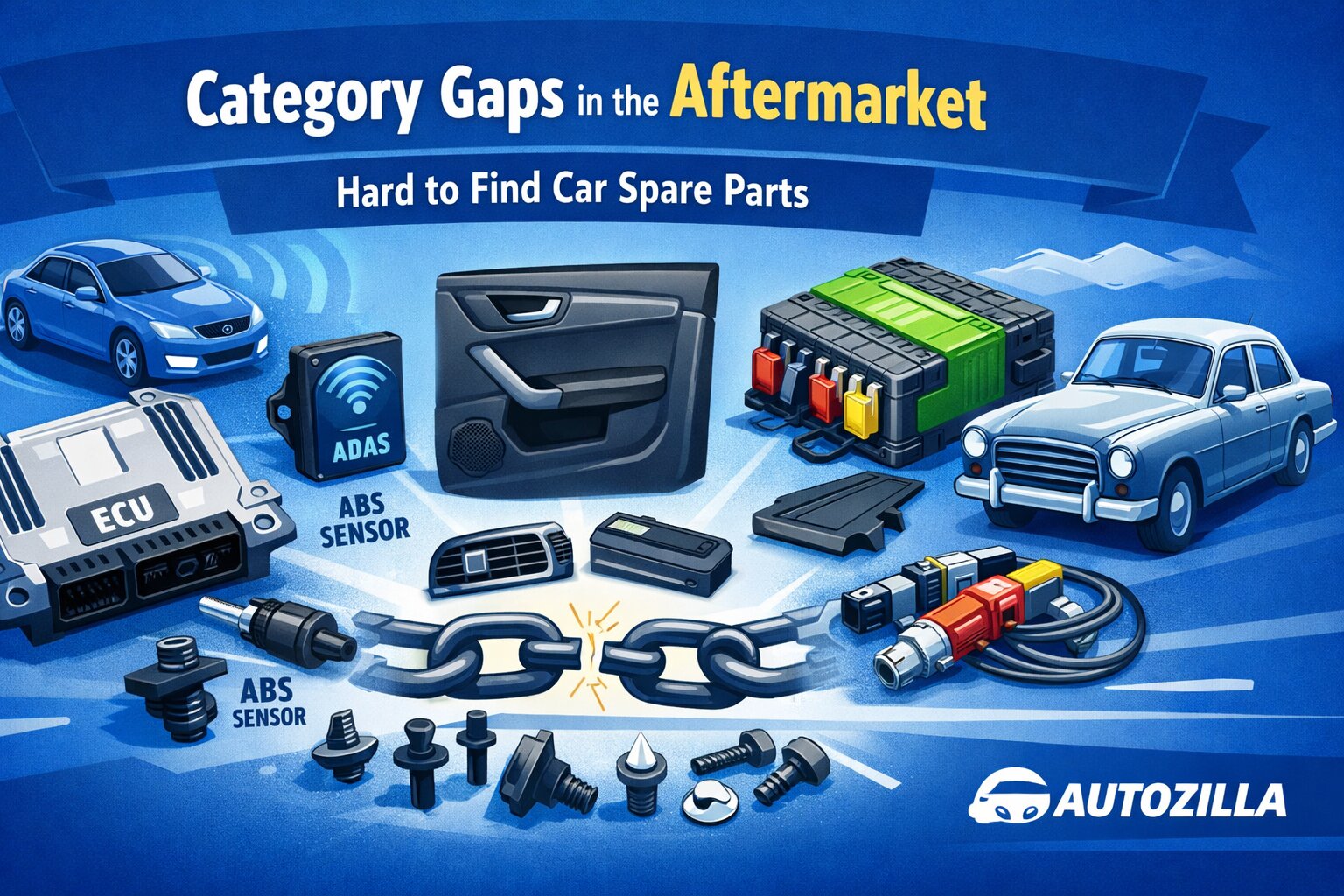
India’s EV aftermarket ecosystem is still developing. Owners can face extended wait times for imported components, limited alternative suppliers, pricing rigidity at authorized centres, and counterfeit component risk.
Many EV parts are not stocked widely, and some are tightly controlled by authorized service channels. This can increase downtime when a component fails.
Proactive parts planning reduces downtime risk. Using a trusted platform to buy car parts online India can support transparent pricing, broader inventory access, and reduced procurement delays. For sensitive systems, prioritize OEM car spares and verified electronics to protect safety and reliability.
EVs can deliver meaningful energy savings and reduced routine servicing costs. However, when you factor tyre replacement frequency, software diagnostics, thermal system maintenance, insurance differentials, and battery risk exposure, the cost advantage can narrow if not managed deliberately.
Financially successful EV ownership depends on structured planning rather than optimistic assumptions.
Establishing early access to trusted car spare parts online reduces the chance of reactive decisions during breakdown scenarios.
Electric vehicles represent the structural future of Indian mobility. They offer lower running costs, smooth power delivery, and long term environmental benefits. However, the narrative of negligible maintenance is incomplete.
EV ownership requires technical awareness, preventive discipline, financial planning, and strategic parts sourcing. Owners who proactively manage maintenance exposure and use reliable platforms such as Autozilla for verified OEM parts, certified aftermarket parts, and authentic car spare parts online are better positioned to preserve long term cost efficiency.
If you want to plan EV maintenance smarter, explore Autozilla to compare options and source genuine spare parts online with clear compatibility checks and transparent pricing.
Visit Autozilla and find the right parts for your car in just a few clicks.